
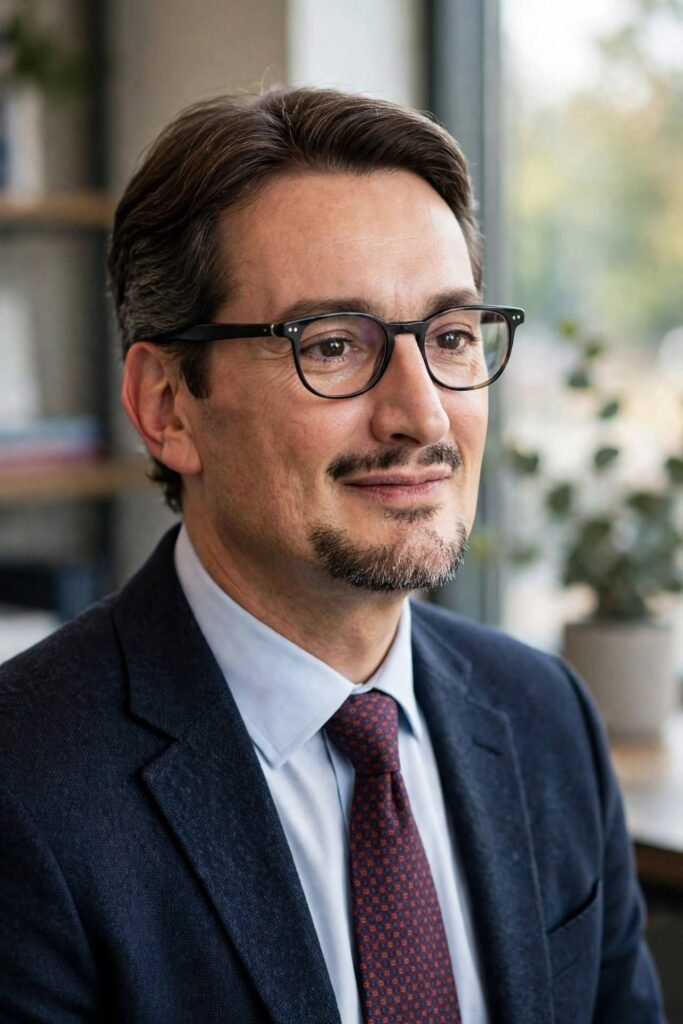
Some of the world’s biggest fortunes are built by people who create something entirely new. Others become successful by taking something that already exists and finding ways to make it much bigger. Giovanni Ferrero belongs to the second group. He inherited a successful family business, but he did not simply protect what his father and grandfather had created. He expanded it, changed its direction, and turned it into one of the world’s largest packaged-food businesses.
Today, the name Ferrero is recognized in more than 170 countries. Millions of people know its products, including Nutella, Kinder, Ferrero Rocher, and Tic Tac. But behind these familiar brands is a business strategy that goes far beyond selling chocolate. Giovanni Ferrero understood that a strong company must continue growing, adapting, and finding new opportunities if it wants to remain successful for generations.
As of November 2026, Bloomberg estimates the wealth of Giovanni Ferrero and his family at approximately $55 billion, placing them at number 33 among the world’s richest people. His fortune is closely connected to the privately owned Ferrero Group, a business that generates billions of euros in annual revenue.
His journey is particularly interesting because he did not build his fortune from nothing. He inherited a powerful foundation, learned how the business worked, faced unexpected family losses, and eventually made decisions that changed the future of the company. His real achievement was not simply inheriting wealth. It was finding a way to multiply the value of what previous generations had built.
A Childhood Surrounded by Business, Discipline, and Family Values
Giovanni Ferrero was born on September 21, 1964, in Farigliano, in Italy’s Piedmont region. He was the younger son of Michele Ferrero and Maria Franca Fissolo. His older brother, Pietro, would later become his closest business partner.
For Giovanni, business was not something he discovered after becoming an adult. It was part of his family history.
His grandfather, Pietro Ferrero, started a confectionery business in Alba, Italy, in 1946. The period following the Second World War was difficult for ordinary families. Chocolate was expensive and not easily available, so his grandfather developed a product using hazelnuts and cocoa. This product became the foundation of a business that would eventually grow into an international food empire.
His father, Michele Ferrero, continued developing the company and introduced products that became famous around the world. Nutella, Kinder Chocolate, and Ferrero Rocher were among the products that helped establish the family’s reputation.
However, Giovanni did not grow up only in Italy. His family moved to Brussels, Belgium, where he attended the European School with his brother. Living in an international environment exposed him to different cultures and languages. It also gave him an early understanding of the importance of international markets.
Later, in 1980, he moved to the United States to study at Lebanon Valley College in Pennsylvania. He studied marketing, an area that would become especially important in his future career.
This international education gave him exposure to a different consumer market and helped prepare him for the challenges of managing a business that would eventually operate across continents.
Learning the Business Before Taking Control
One important part of Giovanni Ferrero’s journey was that he did not immediately enter the highest position in his family’s company.
After completing his studies, he returned to Europe and began working within Ferrero. His early professional experience included marketing responsibilities in Germany and work connected with the Tic Tac brand in Belgium.
He also gained experience in the company’s international operations. Through Ferrero Overseas, he became involved in developing business in markets outside the company’s traditional European base, including Latin America.
These responsibilities gave him practical knowledge of how international businesses operate.
Selling a product in one country is not necessarily the same as selling it in another. Consumer preferences, income levels, shopping habits, distribution networks, and local competition can all be different.
A company that succeeds in Europe cannot automatically expect the same results in America, Asia, or South America.
Giovanni’s early experience helped him understand these differences. He learned about marketing, product positioning, distribution, and the challenges of building a recognizable brand in unfamiliar markets.
This stage of his career was important because it allowed him to gain experience before accepting responsibility for the entire company.
He was not simply entering a business with a famous family name. He was learning how its different parts worked.
The Partnership That Changed His Career
In 1997, Giovanni and his older brother Pietro became joint chief executives of Ferrero International.
This was a major turning point. Their father, Michele, remained an influential figure, but the next generation was now responsible for leading the company.
The brothers worked together while dividing important responsibilities. Pietro was closely connected with production, technical operations, and product development, while Giovanni focused more on international expansion, marketing, commercial strategy, and business development.
Their different areas of responsibility helped them manage a complicated international organization.
Under their joint leadership, Ferrero continued expanding beyond its traditional European markets. The brothers strengthened the company’s international presence and worked on developing its brands in new regions.
Their approach combined the company’s established strengths with a greater focus on global opportunities.
This period also established an important foundation for Giovanni’s later leadership. He gained experience in managing a multinational business, making strategic decisions, and understanding the relationship between product quality and international growth.
However, their partnership would not continue as expected.
The Personal Loss That Changed Everything
In April 2011, Giovanni’s brother Pietro died suddenly while cycling in South Africa. Reports initially described the event as a cycling accident, while later information from the family indicated that he had suffered a heart attack during the ride.
Pietro’s death was a major personal and business loss.
The two brothers had led the company together for approximately fourteen years. They had shared executive responsibilities and were expected to continue managing the family business as a team.
Suddenly, Giovanni had to take responsibility for the company’s leadership alone.
He became the sole chief executive of Ferrero Group, while his father continued to serve as executive chairman.
This was not simply a change in job title. It meant taking responsibility for a large international organization without the brother who had been his closest executive partner.
Giovanni also had to maintain the company’s direction while protecting the values that had been established by his father and grandfather.
The experience marked a new stage in his career. He was no longer one of two brothers sharing responsibility. He had become the central executive figure in the business.
In February 2015, his father Michele Ferrero died at the age of 89. With his father’s death, Giovanni became the principal figure responsible for the family’s controlling interest and the future direction of the group.
Two major family losses had changed the structure of the business within only a few years.
Yet the company continued operating, expanding, and investing in its future.
The Most Important Decision: Changing the Company’s Growth Strategy
Perhaps the most significant difference between Giovanni Ferrero and his father was their approach to expansion.
Michele Ferrero had built the company through product development, innovation, and the creation of powerful brands. He preferred growing the business by developing its own products rather than purchasing other companies.
Giovanni respected this tradition, but he recognized that the international food industry was changing.
Competition was becoming stronger, major companies were expanding their product portfolios, and consumer markets were offering new opportunities.
He believed Ferrero could grow faster by acquiring established businesses rather than relying entirely on products developed internally.
This was a major strategic change.
Instead of remaining primarily a chocolate and confectionery producer, Ferrero began moving into other categories, including biscuits, cookies, ice cream, protein snacks, and breakfast cereals.
The strategy was not simply about buying as many companies as possible. The purpose was to enter markets where Ferrero could use its financial strength, manufacturing experience, distribution network, and brand-management capabilities.
One of the clearest expressions of this philosophy came in a message Giovanni sent to The Wall Street Journal in 2016:
“Tradition is like a bow. The more we stretch the bowstring, the farther we can throw the arrows of modernity and innovation.”
The message reflected an important idea: respecting the past does not mean refusing to change.
A business can preserve its identity while developing new ways to grow.
How He Turned Ferrero into a Global Food Empire
Giovanni’s acquisition strategy gradually changed the size and nature of Ferrero Group.
In 2015, Ferrero acquired the British chocolate company Thorntons for approximately $170 million. The purchase gave Ferrero access to a recognized British confectionery brand and strengthened its position in the United Kingdom.
In 2016, the group acquired Delacre, a Belgian producer of premium biscuits. This was an important step beyond traditional chocolate products.
The strategy became even more ambitious when Ferrero turned its attention to the United States.
Entering the American Candy Market
In 2017, Ferrero acquired Ferrara Candy Company, giving it access to a major portfolio of American confectionery brands.
The portfolio included products such as Nerds, SweeTarts, Laffy Taffy, Brach’s, and Black Forest.
This acquisition provided Ferrero with an established presence in the American candy market rather than requiring it to build an entirely new operation from the beginning.
In 2018, Ferrero made another major move by purchasing Nestlé’s American confectionery business for approximately $2.8 billion.
This transaction brought well-known products into the group’s portfolio, including Butterfinger, Baby Ruth, Crunch, 100 Grand, and Raisinets.
It was one of the most important purchases in the company’s history.
Ferrero was no longer depending only on its European chocolate brands. It now owned established American products with their own customers, distribution networks, and market recognition.
Expanding into Cookies and Biscuits
In 2019, Ferrero acquired several cookie and snack businesses from Kellogg Company.
These included Keebler, Famous Amos, Mother’s, Murray, and Little Brownie Bakers, along with associated manufacturing facilities.
The group also acquired Kelsen Group, a Danish biscuit producer known for Royal Dansk and Kjeldsens.
These purchases helped Ferrero establish a much stronger position in the international biscuit and cookie market.
The importance of these acquisitions was that they expanded the company’s business into categories with different customers, consumption habits, and market opportunities.
Moving into Protein Snacks and Ice Cream
Ferrero continued its expansion into new food categories.
The acquisition of Fulfil Nutrition strengthened its presence in protein-enriched and functional snack products.
In 2023, the company completed its purchase of Wells Enterprises, an American ice cream producer behind brands including Blue Bunny, Bomb Pop, and Halo Top.
It also acquired Jelly Belly Candy Company, famous for its flavored jelly beans.
In 2024, Ferrero purchased Brazilian confectionery manufacturer Dori Alimentos, strengthening its presence in the South American market.
The company also added Power Crunch, an American protein-wafer snack business, to its portfolio in 2025.
Each purchase expanded the group’s reach into a different segment of the food industry.
The WK Kellogg Acquisition: A New Chapter
One of Giovanni Ferrero’s biggest strategic moves came in 2025.
Ferrero agreed to acquire WK Kellogg Co. for an enterprise value of approximately $3.1 billion. The transaction was completed in September 2025.
This was a particularly important development because it took Ferrero into the breakfast cereal business on a major scale.
WK Kellogg’s portfolio included familiar American cereal brands such as Frosted Flakes, Froot Loops, Rice Krispies, Corn Flakes, Special K, and Raisin Bran in its relevant markets.
Approximately 3,000 employees joined the wider Ferrero organization through the transaction.
The acquisition demonstrated how far the company had moved from its original identity as a confectionery producer.
A business that had once been known mainly for chocolate and hazelnut products was now operating across candy, biscuits, cookies, ice cream, protein snacks, and breakfast cereals.
His Approach to Risk: Expanding Without Abandoning the Company’s Identity
Acquisitions of this size involve serious risks.
Buying an established company does not automatically guarantee success. A new business may have different manufacturing systems, employee structures, suppliers, customers, and commercial challenges.
There is also the risk of paying too much, losing the original identity of an acquired brand, or failing to integrate different operations.
Giovanni’s strategy was to use acquisitions to strengthen Ferrero’s position while maintaining the group’s existing business principles.
The company continued investing in its traditional brands, particularly Nutella, Kinder, Ferrero Rocher, and Tic Tac.
At the same time, it used its growing international network to support a broader portfolio of products.
This approach allowed Ferrero to pursue two forms of growth at once.
The first was organic growth, through new products, improved manufacturing, and expansion of existing brands.
The second was external growth, through purchasing businesses that already had established products and customers.
The combination became one of the defining features of Giovanni’s leadership.
Patience, Long-Term Thinking, and the Value of Private Ownership
Another important part of Giovanni Ferrero’s business approach is the company’s ownership structure.
Ferrero has remained privately controlled by the family rather than becoming a publicly traded company.
This gives the group a different decision-making environment from companies that must regularly respond to public shareholders and quarterly market expectations.
Private ownership does not remove business risks, but it can provide greater freedom to make decisions based on longer-term objectives.
For example, a company may need several years to expand a factory, introduce a product, strengthen a distribution network, or integrate an acquisition.
These decisions may not produce immediate results.
Giovanni’s strategy has focused on building a larger business over time rather than relying only on short-term financial performance.
The company’s continued investments in production facilities and technology reflect this approach.
During the 2024/2025 financial year, Ferrero invested close to €1.1 billion in capital projects.
These investments supported manufacturing capacity, technological development, product launches, and factory expansion.
The company also expanded production in North America, including additional capacity for Kinder Bueno in Illinois and plans to manufacture Nutella Biscuits outside Europe for the first time at an enlarged facility in Ontario, Canada.
Such investments show that the group’s strategy is not limited to buying businesses. It also involves improving the company’s own manufacturing and distribution capabilities.
Why He Stepped Away from Daily Management
In 2017, Giovanni made another important decision.
He stepped down as chief executive and became executive chairman. Lapo Civiletti, a longtime company executive, took over as CEO.
This was significant because Civiletti became the first non-family chief executive in Ferrero’s history.
Rather than personally controlling every daily operation, Giovanni chose to separate executive management from long-term strategic leadership.
The professional management team became responsible for running the business, while Giovanni concentrated on major investments, acquisitions, innovation, and the company’s long-term direction.
This decision demonstrated an important understanding of business growth.
As a company becomes larger, its leadership structure must also become more advanced.
The methods that work for a smaller family business may not be sufficient for an organization with factories, employees, customers, and operations spread across the world.
In March 2026, Ferrero announced another governance reorganization.
Giovanni, as President of Ferrero International S.A., retained responsibility for the group’s overall growth agenda, business vision, long-term strategy, and major innovation priorities.
The operating structure was divided into more specialized areas, with Alessandro Nervegna appointed CEO of Ferrero Core.
The reorganization reflected the growing complexity of the business and the need for professional management across different food categories.
One lesson from this decision is that leadership does not always mean personally handling every responsibility. Sometimes the better decision is to build a capable management structure and concentrate on the areas where long-term direction matters most.
The Habits and Qualities Behind His Leadership
Giovanni Ferrero is not a businessman who regularly appears in the media to discuss his personal life or daily activities.
He has maintained a private lifestyle and rarely gives interviews. Therefore, it would be inaccurate to invent a detailed daily routine or claim that his success comes from specific habits that have not been publicly established.
However, several qualities can be understood from his professional decisions and the way he has managed Ferrero.
A willingness to learn before leading: He gained experience in marketing and international operations before becoming joint CEO. His early career gave him practical knowledge of different markets.
Respect for established strengths: He did not abandon the brands and business principles created by previous generations. He continued investing in the products that made Ferrero successful.
Openness to change: He was willing to introduce acquisitions and professional management practices that differed from the traditional family business model.
Long-term thinking: His investments in factories, technology, brands, and international operations show a focus on building future capacity.
Strategic delegation: By appointing professional executives, he allowed the organization to develop a management structure suitable for its increasing size.
Discretion: He has maintained a low public profile, keeping much of his private life and the company’s internal affairs away from unnecessary attention.
His interest in literature also reveals another side of his personality. Alongside business, he has written novels and other works. His published titles include Stelle di Tenebra, Campo Paradiso, and Il Canto delle Farfalle.
His writing career distinguishes him from many executives who devote almost all their public professional identity to business.
The Financial Results of His Strategy
The growth of Ferrero Group under Giovanni’s leadership can be seen in its financial performance.
For the financial year ending August 31, 2025, Ferrero reported consolidated turnover of €19.3 billion, an increase of 4.6 percent over the previous year.
The company operated 36 manufacturing plants and employed 48,697 people at the end of that reporting period.
Following the completion of the WK Kellogg acquisition, the group’s global workforce exceeded 50,000.
Ferrero also markets more than 35 brands in over 170 countries.
These figures demonstrate that the company has become much larger than the original confectionery business founded by Giovanni’s grandfather.
His personal wealth is primarily connected to his ownership interests in the privately held group and related family business assets.
Bloomberg’s November 13, 2026, estimate places the combined wealth of Giovanni Ferrero and his family at approximately $55 billion, ranking them 33rd on its global billionaire list.
This figure should be understood as an estimate of family wealth, not necessarily Giovanni’s individual cash holdings. Much of the fortune is connected to private business assets whose value must be estimated.
The most important point is that his wealth is tied to an operating business with international brands, factories, employees, and substantial annual revenue.
His Commitment to Employees and Social Responsibility
Ferrero’s business culture has historically placed importance on employees, family values, and the communities where its factories operate.
The Ferrero Foundation, established in 1983, supports cultural and social initiatives, including programs for former employees and retirees.
The company has also supported educational and community projects. One example is the Kinder Joy of Moving initiative, developed to encourage physical activity among children and young people.
The group has also invested in sustainability programs involving cocoa, hazelnuts, palm oil, packaging, energy use, and agricultural supply chains.
These issues are important for a company of Ferrero’s size because food production depends on large international networks of farmers, suppliers, manufacturers, and distributors.
The company has faced scrutiny over matters including agricultural sourcing, labor conditions, deforestation, packaging, and the nutritional impact of sweet products. These remain important challenges for the wider food industry.
Giovanni has continued the family’s emphasis on the relationship between business growth and social responsibility.
One statement attributed to him captures this approach:
“I strongly believe that attention to employees’ needs, to their families, to their life even when they quit working, cements a social cohesion that is mutually beneficial.”
It reflects an understanding that a large business is not built by products and financial figures alone. Employees and communities also play an important role in its long-term success.
What Really Made Giovanni Ferrero Successful?
Giovanni Ferrero’s success cannot be explained by one decision or one personal quality.
He benefited from being born into a family that had already established a successful business. His father and grandfather created the foundations, developed valuable products, and built an internationally recognized name.
It would be inaccurate to describe him as someone who created the entire Ferrero fortune from nothing.
However, it would also be unfair to overlook his own contribution.
He took an established confectionery company and changed its growth strategy. He recognized the value of acquiring existing brands, entered new markets, expanded into different food categories, and created a more professional management structure.
Several factors stand out.
First, he understood the value of a strong foundation. Rather than replacing everything his family had created, he used its existing strengths as the starting point for further expansion.
Second, he recognized opportunities beyond the traditional business. He understood that Ferrero did not have to remain limited to chocolate and candy.
Third, he was willing to make major decisions. The acquisitions of Nestlé’s American confectionery business and WK Kellogg Co. were significant financial commitments that changed the company’s direction.
Fourth, he understood the importance of professional management. He allowed experienced executives to take responsibility for daily operations while retaining a strategic role.
Finally, he maintained a long-term approach. His decisions focused on building a larger and more diversified business rather than simply protecting the company’s existing position.
His journey shows that success in business is not always about creating something completely new. Sometimes it comes from recognizing the potential of an existing business and having the ability to take it to another level.
Life Lessons from Giovanni Ferrero’s Journey
Giovanni Ferrero’s story offers several useful lessons for young entrepreneurs, business owners, and people who want to build something valuable.
- Learn Before You Take Responsibility
Giovanni gained experience in marketing and international operations before becoming chief executive. This is an important lesson for anyone entering business. Understanding how a company works is more valuable than simply holding an impressive position. - Respect Your Foundation, But Do Not Become Trapped by Tradition
He preserved the values and famous products created by previous generations while changing the company’s expansion strategy. Tradition can provide strength, but it should not prevent progress. - Think Beyond Your Current Market
Ferrero did not remain limited to its original European customer base. It expanded into America and other international markets. Business owners can learn to look beyond their immediate surroundings and identify opportunities in new markets. - Understand the Power of Acquisitions
Building a business from the beginning is not the only way to grow. Sometimes purchasing an established business can provide access to customers, products, technology, and distribution networks much faster.
However, acquisitions require careful research, financial discipline, and a clear integration strategy. - Do Not Confuse Leadership with Doing Everything Yourself
Giovanni’s decision to appoint professional executives shows the importance of building a capable team. A business cannot grow indefinitely if every major responsibility depends on one person. - Protect What Makes Your Business Different
Ferrero continued investing in its established brands even while purchasing other companies. Expansion should strengthen the original business rather than destroy the qualities that made it successful. - Make Decisions for the Long Term
Factories, technology, product development, and international distribution require patience and investment. A strong business is built through decisions that may take years to produce their full value. - Keep Learning Beyond Your Profession
Giovanni’s interest in writing shows that his professional identity is not limited to business. Developing interests outside work can provide different ways of thinking and understanding the world.
Conclusion: The Difference Between Inheriting a Business and Building Its Future
Giovanni Ferrero’s journey is a story of inheritance, responsibility, difficult changes, and strategic expansion.
He did not start with an empty bank account or a small business struggling to survive. He inherited a company that his grandfather and father had already transformed into a major international success.
But inheriting a successful business is not the same as knowing how to lead it into the future.
Giovanni faced the unexpected loss of his brother, later lost his father, and became responsible for protecting the family’s business legacy. Instead of simply maintaining the company in its traditional form, he introduced a different approach to growth.
He expanded Ferrero through major acquisitions, entered new food categories, strengthened its international presence, and built a management structure capable of handling a much larger organization.
His story offers a lesson that applies to both family businesses and entrepreneurs building something of their own: success is not only about what you receive or what you create. It is also about what you do with the opportunities and responsibilities placed in your hands.
The Ferrero family created the foundation. Giovanni Ferrero expanded its reach and changed its future.
And perhaps that is the most important reason behind his success: he understood that protecting a great business does not mean keeping it exactly as it was. Sometimes, the best way to preserve a legacy is to have the courage to take it somewhere new.