
Introduction
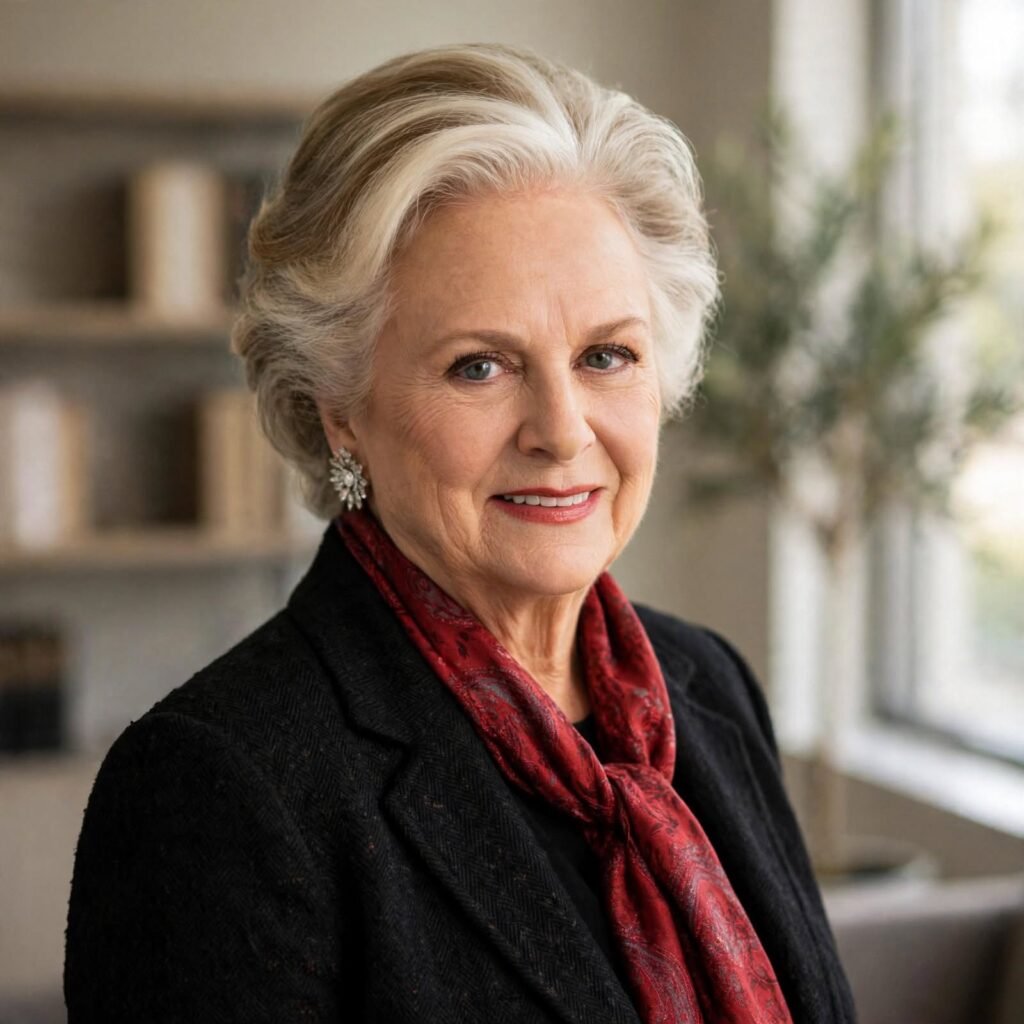
A chocolate bar may cost only a few dollars, but the business behind it can create one of the world’s largest private fortunes. For Jacqueline Mars, the American businesswoman and heiress, familiar products such as Snickers, M&M’s, Milky Way, and other popular brands became part of a family legacy that grew into a global business empire.
Born into the family behind Mars, Incorporated, Jacqueline did not have to build a company from nothing. She inherited a significant ownership stake in an established business. However, her story involves more than inherited wealth. She spent nearly two decades working in the family company, held a senior executive position, supported the business through its continued development, and later devoted considerable attention to philanthropy, conservation, and equestrian activities.
Her journey offers a useful perspective on wealth, responsibility, patience, and long-term thinking. It also highlights an important distinction: inheriting a successful business provides opportunities that most people do not have, but maintaining a family enterprise across generations still requires sound decisions, capable leadership, and a commitment to its future.
Early Life: Growing Up in a Family Business
Jacqueline Mars was born on October 10, 1939, into the family that owned Mars, Incorporated. She was the daughter of Forrest Mars Sr. and Audrey Ruth Mars, and the granddaughter of Frank C. Mars, who founded the business that eventually became one of the world’s leading confectionery companies.
Her grandfather began the family’s chocolate-making venture on a small scale. Over time, the business developed into a much larger operation. Her father, Forrest Mars Sr., helped expand its product range and develop well-known chocolate bars, including Milky Way and Snickers. The company later became associated with numerous other products, including M&M’s, Twix, Skittles, chewing gum, and pet food.
This family history placed Jacqueline close to the world of business from an early age. She grew up with access to resources and opportunities that were unavailable to most people. Nevertheless, the family was known for maintaining a relatively private lifestyle rather than constantly displaying its wealth.
Her father’s approach to raising his children emphasized modesty and hard work despite their privileged circumstances. Such an upbringing could encourage a sense of responsibility toward the family enterprise, although it would be inaccurate to assume that Jacqueline experienced the same financial difficulties or barriers faced by people building businesses without inherited advantages.
Her educational background also extended beyond the practical concerns of running a confectionery business. She attended Miss Hall’s School in Pittsfield, Massachusetts, and graduated from Bryn Mawr College in 1961 with a degree in anthropology.
Anthropology focuses on human societies, cultures, and behavior. Although it was not a conventional business degree, studying a subject concerned with people and social systems can provide a broader perspective on the world. There is no clear evidence that her degree directly shaped particular business decisions, but her education formed an important part of her development before she entered the family company.
Entering Mars, Incorporated: From Family Member to Executive
Jacqueline’s professional journey took a more direct turn in 1982, when she joined Mars, Incorporated, as president of its Food Product Group.
This was a significant step because it placed her inside the business rather than leaving her as an owner with no active professional responsibilities. She worked within the organization for nearly two decades, gaining experience in a company whose operations extended beyond the products most consumers associated with its name.
Mars was already an established enterprise, so Jacqueline did not face the same challenges as a first-time entrepreneur trying to find customers, secure initial funding, or persuade people to buy an unfamiliar product. Instead, her position involved working within an existing corporate structure and contributing to a business that had already developed its market presence.
That distinction matters when evaluating her success. Her career was supported by family ownership, established brands, financial resources, and an existing workforce. At the same time, a large company requires people who understand its operations, protect its reputation, and make decisions with the organization’s future in mind.
Jacqueline remained active in the business until her retirement in 2001. Her nearly 20-year career gave her a professional role separate from simply holding inherited shares.
Her experience illustrates one useful principle: ownership and management are different responsibilities. Owning part of a business provides a financial interest in its performance, while working inside it creates opportunities to understand how the organization operates and what it needs to remain successful.
The Turning Point: Inheriting a Share of the Mars Empire
A major turning point came in 1999, when Jacqueline’s father died. His children inherited interests in the family business, placing Jacqueline and her brothers John Mars and Forrest Mars Jr. among its principal owners.
Jacqueline ultimately became the owner of an estimated one-third stake in Mars, Incorporated. Her brother John also owns an estimated one-third, while the remaining ownership passed through the family of her late brother Forrest Mars Jr.
The inheritance gave Jacqueline a substantial financial foundation. It also connected her future wealth to the long-term performance of a company serving customers across international markets.
Mars was not simply a chocolate manufacturer. Over generations, the business had expanded into different categories, including food and pet care. Brands such as Pedigree and Royal Canin helped establish a presence in the pet-care market, while the company’s confectionery products continued to reach consumers around the world.
Diversification gave the company access to different customer needs and sources of revenue. Chocolate and candy remained central to its public identity, but the wider business could also benefit from demand for pet food, animal care, and other products.
This broader business model helps explain why the family’s wealth grew far beyond what a single confectionery brand might generate.
Jacqueline’s inheritance was therefore the foundation of her fortune, while the scale, market position, and continued development of Mars helped sustain its value. Her personal wealth should not be presented as the result of building the entire company herself. Rather, she became a major beneficiary and long-term owner of an enterprise developed across generations.
How Mars Became a Global Business Powerhouse
The growth of Mars, Incorporated, is central to understanding Jacqueline Mars’s financial success.
The company built its reputation through recognizable products, consistent consumer demand, and an expanding range of businesses. Its brands became familiar in supermarkets, convenience stores, and households across many countries.
Products such as Snickers, M&M’s, Milky Way, and Twix helped establish the company’s position in confectionery. Its expansion into pet food created another major business area, connecting the company to consumers who purchase food and care products for their animals throughout the year.
The company’s history also includes major acquisitions. In 2008, Mars and Berkshire Hathaway completed the acquisition of Wm. Wrigley Jr. Company in a transaction valued at approximately $23 billion. The deal strengthened Mars’s position in chewing gum and confectionery and expanded the reach of its brands.
This kind of expansion illustrates how established businesses can grow beyond their original products. Rather than depending entirely on one category, a company can acquire complementary brands, enter related markets, and use its existing distribution network to reach more customers.
Mars has also invested in sustainability. In 2017, the company announced a $1 billion sustainability initiative intended to support its environmental goals and contribute to broader international efforts, including the United Nations Sustainable Development Goals and the Paris climate objectives.
These corporate developments form part of the wider environment in which Jacqueline’s ownership stake gained value. They should not be confused with achievements she personally directed, but they demonstrate why the business behind her inheritance has remained economically important.
The lesson is not that every entrepreneur should acquire large companies or spend billions on expansion. It is that long-term business value can depend on more than a successful product. Brand recognition, distribution, diversification, operational strength, and the ability to respond to changing markets can all contribute to a company’s continued growth.
Patience and Long-Term Thinking
One of the most useful aspects of Jacqueline Mars’s career is its length. She joined the family company in 1982 and remained professionally involved until 2001.
Her career was not a short experiment designed to produce immediate recognition. It extended over many years within an established organization.
However, the available evidence does not establish a specific daily routine, personal investment strategy, or private philosophy that explains her professional decisions. It would be misleading to invent such details. What can reasonably be observed is that she maintained a long-term connection to the business, served in a senior role, and continued as a shareholder after leaving her executive position.
Long-term thinking is especially important in family-owned businesses. Decisions about brands, factories, employees, suppliers, and new markets can affect a company for years. Owners who focus exclusively on immediate financial returns may overlook the investments required to preserve the business’s future.
A statement attributed to a Mars company spokesperson in 2021 described the family’s belief that the company’s everyday activities could contribute to the kind of world they wanted to see in the future. The spokesperson also said the family reinvested the vast majority of the company’s profits back into the business.
That approach reflects a distinction between extracting money from a company and strengthening the organization that generates it. Reinvestment can support new facilities, product development, business expansion, and improvements to existing operations.
For ordinary readers, the lesson is to think beyond immediate results. Whether building a small business, learning a skill, or saving money, progress can depend on putting some resources back into the activity that creates future value.
Jacqueline’s experience also demonstrates the importance of understanding the difference between a documented fact and an interpretation. Her long professional career is established. The precise thoughts and motivations behind every decision are not publicly known.
Retirement Did Not End Her Connection to the Business
Jacqueline Mars officially retired from active employment at Mars in 2001. Her retirement, however, did not mean that she ceased to have an interest in the company’s future.
As a major shareholder, she continued to benefit from the performance of the family enterprise. She was also reported to have remained a strategic adviser, while her son Stephen Badger later served on the company’s board of directors.
This arrangement illustrates how a person’s relationship with a business can change over time. An executive may leave day-to-day responsibilities while retaining ownership and a long-term interest in the organization.
It also shows the importance of continuity in a family enterprise. When ownership passes between generations, the family must consider how to preserve its interests while allowing the business to operate effectively.
Mars has maintained its identity as a family-owned company while operating on a global scale. Its continued development has depended on far more than the involvement of any single family member. Employees, executives, managers, suppliers, and other professionals all contribute to its operations.
Jacqueline’s role is therefore best understood as one part of a much larger business system. Her ownership provides an important link to the family legacy, while the company’s daily performance depends on the people responsible for running it.
A Personal Interest in Horses and Equestrian Sports
Beyond the family company, Jacqueline Mars has developed a strong interest in horses and equestrian activities.
She has supported equestrian organizations and has been associated with the U.S. Equestrian Team Foundation. She also owns Stonehall Farm in Virginia, a property associated with organic agriculture and horse-related activities.
Her interest in horses is not limited to private enjoyment. She has supported organizations and initiatives connected to equestrian sport, including efforts to help the sport develop and provide opportunities for riders.
Her contributions have received recognition within the equestrian community. She was inducted into the United States Eventing Association Hall of Fame in 2015, and she received the U.S. Eventing Association President’s Lifetime Achievement Award in 2021.
These achievements reveal another dimension of her life. Her public identity is closely connected to the Mars fortune, but her interests also include activities that require specialized knowledge, sustained involvement, and support for institutions outside her principal business.
Equestrian sport can demand considerable time, training, and financial resources. Although her wealth gave her access to facilities and opportunities, her continued involvement and support helped connect her resources to a field she values.
The broader lesson is that financial success can create opportunities to pursue interests beyond one’s original profession. It can also provide the means to support communities and institutions that might otherwise struggle to obtain sufficient funding.
Philanthropy: Using Wealth Beyond Business
Jacqueline Mars has supported a range of charitable, cultural, educational, and conservation-related causes.
Her philanthropic interests have included the National Symphony Orchestra, the Smithsonian, cultural institutions in Washington, and organizations associated with environmental protection and equestrian activities. She has also supported efforts connected to conservation and sustainable agriculture.
Her relationship with Bryn Mawr College has continued beyond graduation. In 2026, she made a reported $10 million gift to her alma mater to expand educational access. The contribution illustrates how a connection formed during university years can remain meaningful decades later.
Mars has also been associated with the Mars Foundation, now known as the Mars HQ Regional Foundation, which has supported areas including education, arts and culture, animal welfare, natural resources, health, and human services.
Philanthropy provides a way to direct money toward causes that may not generate commercial returns but can still offer public benefits. Donations can help educational institutions broaden access, cultural organizations maintain their programs, and conservation groups protect natural environments.
Nevertheless, philanthropy should be assessed thoughtfully. Giving money to worthy causes is one way to contribute, but the size of a donation alone does not establish the full impact of a person’s charitable work. Outcomes depend on how funds are used, whether programs achieve their objectives, and whether the support produces lasting benefits.
Jacqueline’s charitable involvement shows how a person with substantial resources can support causes beyond the business that created their wealth. It also provides a practical reminder that giving does not need to be limited to billionaires. People with more modest incomes can contribute through donations, volunteering, professional skills, or consistent support for community organizations.
A Serious Personal Setback: The 2013 Car Accident
Jacqueline Mars’s life has also included a tragic event that deserves attention without sensationalism.
On October 4, 2013, she was involved in a vehicle collision in Virginia. The crash killed one passenger in the other vehicle, and another passenger, who was eight months pregnant, subsequently suffered a miscarriage.
Mars pleaded guilty to misdemeanor reckless driving in connection with the incident. Reports stated that she acknowledged falling asleep at the wheel and expressed regret over the tragedy.
The event had consequences that cannot be measured in financial terms. A person’s wealth, business position, or public reputation cannot reverse a loss of life or undo the harm caused by a serious accident.
This incident is not evidence of business failure, nor should it be turned into an artificial motivational story. It is a reminder that personal responsibility matters regardless of a person’s social position.
The practical lesson is straightforward: fatigue can create serious dangers when driving, and no schedule or obligation is worth taking an unnecessary risk on the road. When a person is too tired to drive safely, stopping and resting is the responsible choice.
The accident also demonstrates why a balanced biography should recognize difficult events rather than presenting a wealthy person as someone whose life consists entirely of success and achievement.
Jacqueline Mars’s Net Worth and Financial Position
Jacqueline Mars’s wealth comes primarily from her ownership stake in Mars, Incorporated, rather than from a company she founded independently.
Her fortune has increased substantially over the decades as the business expanded and the value of its operations grew. The company remains privately held, so its ownership is not traded on a public stock exchange in the same way as shares in listed companies.
According to Forbes’ real-time billionaire profile, Jacqueline Mars’s estimated net worth was approximately $50.3 billion on October 26, 2026. The estimate placed her among the world’s wealthiest people.
Her wealth has varied across different years and estimates. Forbes listed her fortune at approximately $38.3 billion in 2023, while earlier estimates were lower. These figures are estimates rather than a public accounting of all her personal assets and liabilities.
The distinction is important because Mars, Incorporated, is a private company. Its precise internal ownership and financial details are not all publicly available, and changes in estimated business value can affect the fortunes attributed to its shareholders.
Jacqueline’s financial position also highlights the difference between inherited wealth and self-made wealth. She inherited a substantial interest in a company that had already been developed by earlier generations. The continued value of that inheritance reflects the scale and performance of the enterprise, but it would be inaccurate to describe her entire fortune as the result of personal entrepreneurship.
Recognizing this distinction does not diminish the importance of understanding her career. Instead, it makes the explanation more accurate. Her story is primarily about family business ownership, participation in a major corporation, the preservation of a legacy, and the opportunities and responsibilities that accompany significant inherited wealth.
The Real Factors Behind Jacqueline Mars’s Success
Jacqueline Mars’s story reveals several factors that help explain her position, but they should be understood in the context of her family’s advantages.
- The Value of an Established Foundation
The most important factor in Jacqueline’s wealth was her inherited ownership of Mars, Incorporated. The company already possessed established brands, business relationships, employees, and an international customer base.
This foundation gave her access to opportunities that a new entrepreneur would have to spend years developing.
The practical lesson is to recognize the value of the foundation available to you. Not everyone inherits a business, but people can build on other forms of support, including education, professional experience, trusted relationships, and existing knowledge. - Professional Involvement
Jacqueline did not limit her connection to Mars to ownership alone. She joined the company in 1982 as president of the Food Product Group and remained active until 2001.
Her career demonstrates the distinction between possessing an asset and participating in the organization connected to it.
For anyone working in a family business, the lesson is to develop real professional skills rather than relying entirely on family connections. Knowledge of operations, responsibility, and an understanding of the company’s goals can help prepare the next generation to contribute meaningfully. - Continuity Across Generations
Mars remained a family-owned business as it expanded into different markets. That continuity allowed the family to retain a substantial ownership interest rather than selling the entire enterprise to outside investors.
Family ownership does not automatically guarantee good decisions, and many family businesses struggle when leadership changes. The Mars experience nevertheless illustrates how a long-term ownership structure can preserve a connection between successive generations and an established company.
The practical lesson is to consider how today’s decisions affect tomorrow’s opportunities. Whether managing money, building a career, or running a business, it is worth asking whether an immediate benefit could undermine a more valuable long-term goal. - Diversification and Business Development
Mars expanded beyond traditional chocolate products into other categories, particularly pet care. Major acquisitions, including the Wrigley transaction, further strengthened its presence in related markets.
These developments helped create a broader business with multiple product lines and customer groups.
The lesson for smaller businesses is not to pursue expansion at any cost. It is to understand customer needs, strengthen the main business, and explore related opportunities only when the organization has the resources and knowledge to manage them effectively. - A Long-Term Relationship With the Business
Jacqueline’s nearly 20 years of professional involvement, followed by continued ownership, reflect a long connection to the family enterprise.
Although her private working habits are not fully documented, her career provides evidence of sustained participation over an extended period.
For ordinary readers, long-term commitment can mean continuing to develop a skill, serving customers consistently, or improving a business through repeated small decisions. Persistence becomes useful when it is paired with learning and sound judgment rather than simply repeating an approach that does not work. - Using Resources to Support Other Interests
Jacqueline’s philanthropic activities and support for equestrian organizations show how substantial financial resources can be directed toward interests beyond a person’s main business.
This does not mean that wealth automatically makes someone generous or that every donation produces meaningful results. It does show that financial resources can create opportunities to support education, culture, conservation, and community activities.
The practical lesson is to consider how available resources, however limited, might help other people. Time, knowledge, and practical assistance can be valuable forms of contribution as well as money.
What Her Journey Can Teach Ordinary Readers
Jacqueline Mars’s circumstances differ greatly from those of someone starting with little money, but several lessons can still be drawn from her experience.
First, understand the difference between opportunity and achievement. Having access to a successful business is a major advantage. Making responsible use of that opportunity requires knowledge, judgment, and an understanding of the responsibilities involved.
Second, develop skills that stand independently of your background. Jacqueline’s role in the Food Product Group gave her professional experience within the company she owned. In any career, practical knowledge can help turn an opportunity into a more meaningful contribution.
Third, think beyond immediate rewards. The continued development of Mars demonstrates the importance of maintaining brands, expanding thoughtfully, and investing in the future. Individuals can apply the same principle by improving their skills and managing their finances with a longer time horizon.
Fourth, acknowledge the role of circumstances. Family wealth, education, timing, and access to resources played major roles in Jacqueline’s journey. Understanding these advantages creates a more honest picture of success and prevents people from assuming that every wealthy person reached their position through the same path.
Fifth, treat responsibility as part of success. Business achievements and financial wealth do not remove the need for safe decisions, accountability, and consideration for others. The 2013 accident is a painful reminder of this principle.
Finally, consider what you want your resources to accomplish. Jacqueline’s support for education, conservation, cultural institutions, and equestrian activities illustrates one way wealth can be directed toward interests beyond personal consumption. People at every income level can think about the contribution they want to make.
Conclusion
Jacqueline Mars’s story is closely connected to one of the most successful family businesses in the United States. Through her inheritance, she became a major owner of Mars, Incorporated, the company built by her grandfather and expanded by her father. Her professional career, lasting from 1982 to 2001, gave her a role inside the organization, while her continued ownership tied her fortune to its long-term performance.
Her wealth is not a conventional self-made success story. It rests primarily on inherited ownership and the continuing value of an established global business. Recognizing that fact is essential to understanding how she reached her position.
At the same time, her career offers useful lessons about professional involvement, business continuity, long-term thinking, and the use of financial resources to support other interests. Her philanthropic activities and commitment to equestrian causes show that her public life extends beyond confectionery and corporate ownership.
Ultimately, Jacqueline Mars’s legacy is linked to two connected stories: the growth of a family business across generations and her own participation in that enterprise. Her experience reminds us that success can take different forms, that inherited advantages matter, and that preserving what previous generations created can be a responsibility in its own right. The most useful lesson is not that everyone can reproduce her financial results, but that opportunities are best understood honestly and used with care, knowledge, and a view toward the future.