
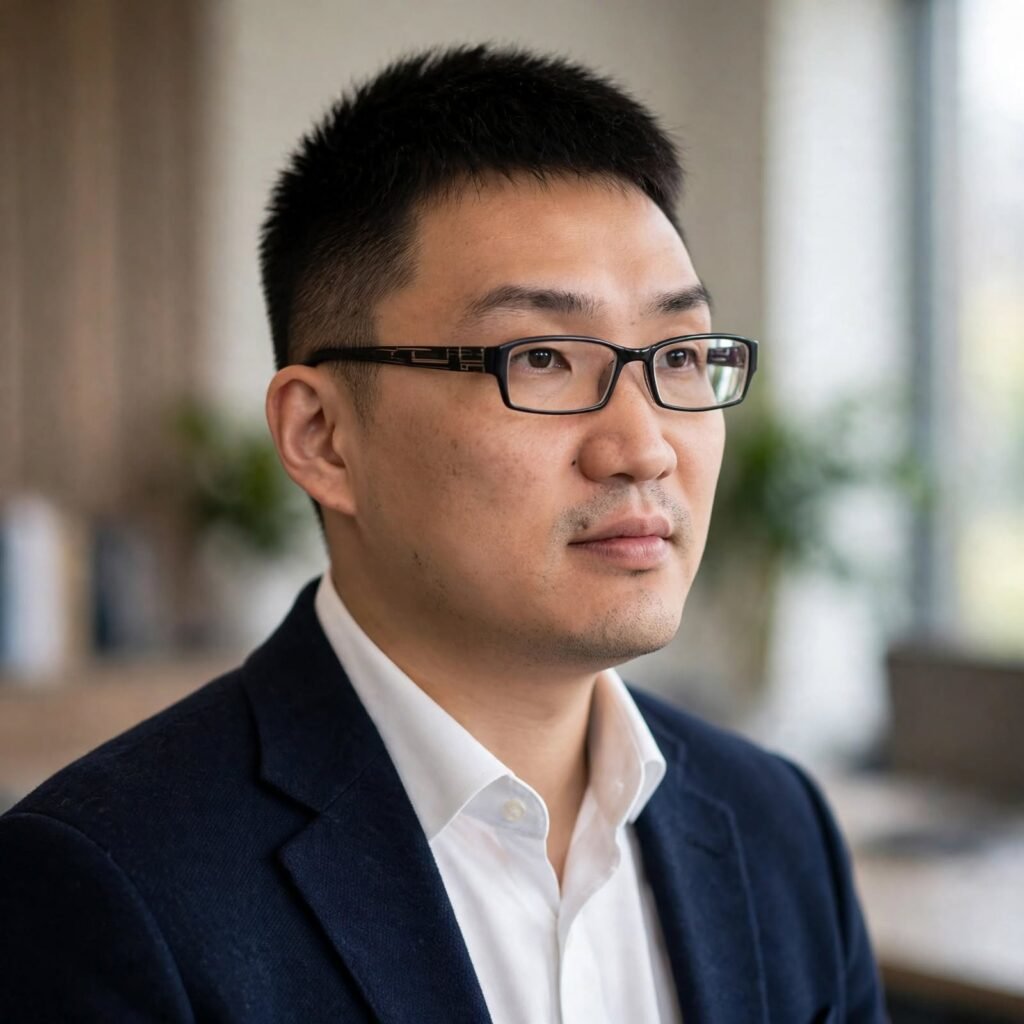
Introduction: The Entrepreneur Who Challenged China’s E-Commerce Giants
In 2018, Colin Huang became one of the most talked-about entrepreneurs in China after his company, Pinduoduo, made its debut on the Nasdaq stock exchange. At the time, his estimated fortune reached approximately $9.89 billion, making him one of China’s youngest self-made billionaires.
His achievement was especially striking because he had entered a market already dominated by powerful companies such as Alibaba and JD.com. Rather than copying their business models, Huang built a shopping platform around a different idea: people could save money by shopping together and sharing deals with friends.
The strategy helped Pinduoduo attract hundreds of millions of consumers in just a few years. By 2017, the company had recorded gross merchandise volume of more than 140 billion yuan, equivalent to approximately $20.5 billion at the time. Within three years of its launch, it had become one of China’s leading e-commerce businesses.
Yet Huang’s story is not simply about becoming rich. It is about how education, technical skills, experience, careful observation, and a willingness to challenge established business practices can create opportunities in a competitive market.
His journey also reveals an important truth about entrepreneurship: success often comes not from having an entirely new idea, but from finding a better way to solve a problem that established businesses have overlooked.
Early Life: Growing Up in a Working-Class Family
Colin Huang Zheng was born on January 1, 1980, in Hangzhou, Zhejiang province, China. His parents worked in factories, and his childhood was far removed from the world of wealthy business owners and technology investors.
Hangzhou would later become famous as the home of Alibaba, one of China’s largest technology companies. But when Huang was growing up, he was simply a student with an interest in mathematics and computers.
He demonstrated strong mathematical ability at an early age and won a medal in a Mathematics Olympiad competition. His performance helped him gain admission to Hangzhou Foreign Languages School, an elite institution known for its strong academic environment.
This school introduced him to students from different social and economic backgrounds. Some of his classmates came from influential families, giving him early exposure to people whose experiences and opportunities differed from those of his own family.
Huang later reflected on how the school exposed students to Western culture and ideas earlier and more deeply than many other schools in China.
Such an environment can be valuable for a young person. It provides opportunities to develop confidence, learn from talented classmates, and understand how people with different experiences approach the world.
Huang’s background did not automatically give him access to wealth or business power. What it gave him was a starting point. His academic ability, educational opportunities, and willingness to learn helped him build the skills that would later support his career.
Education and the First Signs of His Potential
After completing high school, Huang entered Zhejiang University at the age of 18 to study computer science.
His university years strengthened his technical knowledge and introduced him to a wider network of talented students and professionals. During his freshman year, he was selected as one of a small number of Chinese fellows for the Melton Foundation, established by Verifone founder Bill Melton.
The opportunity reflected his academic promise and gave him access to a broader international environment.
Huang also gained practical experience through an internship at Microsoft’s Beijing office. He reportedly earned 6,000 yuan during the internship, an amount he later recalled was more than his mother earned.
For him, this experience offered a clear demonstration of how technical skills could create opportunities beyond the economic circumstances into which someone was born.
He eventually moved to the United States to pursue a master’s degree in computer science at the University of Wisconsin–Madison.
His professor was impressed by his performance and wrote recommendation letters that helped him secure job offers from major technology companies, including Oracle, Microsoft, and IBM.
Many graduates would have considered these offers excellent career outcomes. Huang, however, chose a different path.
In 2004, he joined Google, then a rapidly growing internet company, rather than accepting one of the more established opportunities available to him.
The decision carried uncertainty. Google had not yet become the technology giant it is today, and its long-term prospects were not guaranteed. Nevertheless, Huang saw value in joining a company that was building new products and operating in a fast-changing industry.
This decision would become one of the most important turning points in his professional life.
Google: Learning From a Fast-Growing Technology Company
Huang worked as an engineer at Google for approximately three years. During that period, he gained experience in software development, technical problem-solving, and the operations of a rapidly expanding internet business.
The timing was significant. Google went public in 2004, the same year Huang joined the company. Its share price rose substantially during his time there, and the stock options he received became valuable.
Huang later described the financial benefit as giving him a basic level of financial freedom.
That financial foundation mattered because it reduced the pressure to follow a conventional career path simply to earn a salary. It gave him greater room to experiment with business ideas and accept the risks involved in starting companies.
But money was not the only benefit of his Google experience.
Working at a major technology company also exposed him to the relationship between software, users, product decisions, and business growth. These lessons would become useful when he eventually developed his own platforms.
His experience also demonstrated that a prestigious job can be valuable without having to become a lifelong destination. A person can use employment to develop skills, understand an industry, build savings, and prepare for a different ambition.
Huang eventually became frustrated with the practical difficulties of managing Google’s operations across countries. In one account, he recalled travelling across the Pacific to obtain approval for a relatively small change involving the colour and font size of Chinese characters in search results.
The incident illustrated how even minor decisions could become complicated inside a large international organization.
He eventually resigned and returned to China in 2006.
Leaving Google was a significant decision. He was giving up the security and status of an established employer to explore opportunities on his own. However, he was not starting from nothing. He had education, technical experience, professional connections, and some financial independence.
These resources made the risk more manageable.
His First Businesses: Learning Before Building Pinduoduo
Huang did not become a billionaire immediately after leaving Google. Instead, he spent years experimenting with different business models.
In 2007, he founded Ouku, an e-commerce business selling consumer electronics and home appliances. This was his first major step toward becoming an independent entrepreneur.
Running an online retail business gave him practical experience in selling products, attracting customers, and understanding the challenges of e-commerce.
He sold Ouku in 2010 and moved on to another venture, Leqi. This business helped foreign brands market their online stores on Chinese e-commerce platforms, including Tmall and JD.com.
His third major venture was a gaming studio known as Xunmeng, which developed web-based role-playing games.
These businesses operated in different areas, but they shared an important connection: each helped Huang understand how people behaved online.
E-commerce taught him about products, pricing, and customer acquisition. Marketing taught him how brands attracted consumers. Gaming exposed him to interactive experiences that encouraged people to return, participate, and invite others.
These experiences later became central to Pinduoduo’s design.
There is no need to assume that every decision in his early career was perfect. The important point is that he continued gaining experience rather than treating his first business as the final destination.
Each venture helped him develop a broader understanding of internet businesses and the factors that influence user behaviour.
By the time he founded Pinduoduo in 2015, Huang had already spent years working with technology, online shopping, marketing, and games.
He was better prepared to recognize an opportunity than someone approaching the market for the first time.
The Idea Behind Pinduoduo: Making Shopping a Social Experience
When Huang launched Pinduoduo, China’s online shopping market was already highly competitive.
Alibaba’s platforms and JD.com had established strong positions, attracted large numbers of merchants, and built trusted relationships with consumers. Entering this market with another conventional online store would have placed a new company at a considerable disadvantage.
Huang needed a different approach.
He observed how smartphones and messaging applications were changing daily life in China. People were increasingly using their phones to communicate, make payments, discover products, and conduct business.
He saw an opportunity to combine online shopping with social interaction.
Pinduoduo introduced a group-buying model in which customers could receive lower prices by purchasing products together. A shopper might find an item on the platform and share the offer with friends through WeChat. If enough people joined the deal, they could qualify for a discounted price.
The model gave consumers a reason to share product links, while each shared offer introduced the platform to potential new customers.
This created a useful connection between shopping and social networks. Instead of relying entirely on conventional advertising, Pinduoduo encouraged its existing users to help attract new ones.
The company’s name reflects the idea of gathering people together to shop.
Pinduoduo also used game-like features to make shopping more interactive. Users could participate in promotional activities, invite friends to help reduce prices, and explore special offers for new customers.
Some promotions promised free products after enough people participated. These offers encouraged users to share links and return to the application.
The strategy drew on principles that Huang had encountered through his earlier work in gaming and e-commerce.
The result was not simply an online store with inexpensive products. It was a shopping experience designed to make customers active participants in attracting other customers.
Understanding an Overlooked Market
One of Huang’s most important decisions was to focus heavily on consumers in China’s lower-tier cities and less affluent markets.
Large e-commerce companies had already built strong businesses among consumers in major cities. Huang recognized that many people outside these wealthy urban centres had different needs and priorities.
For price-sensitive households, the lowest practical price could matter more than premium branding, elaborate shopping experiences, or access to luxury products.
Pinduoduo’s group-buying system addressed this demand directly. It offered shoppers a way to reduce costs while using communication tools they already knew.
The platform sold a wide range of products, including clothing, household essentials, electronics, toys, and fresh food.
Its approach helped make online shopping attractive to consumers who were particularly sensitive to prices. It also gave merchants access to a large audience interested in affordable goods.
This was a strategic choice rather than a simple attempt to compete on price alone. Pinduoduo combined lower prices with social sharing, promotional games, and a business model that encouraged repeat participation.
The distinction is important. Low prices by themselves are not enough to guarantee a successful business. Competitors can often reduce their prices as well.
Pinduoduo’s model gave customers an additional reason to participate: they could help unlock discounts by involving other people.
This approach helped the company spread through personal networks and build a large customer base in a relatively short period.
For entrepreneurs, the wider lesson is that a large market does not always represent the best opportunity. Sometimes, the better opportunity lies with a group of customers whose needs are not being served effectively by the largest competitors.
Huang did not need to persuade every Chinese consumer to abandon existing platforms. He needed to build a compelling alternative for people who valued a different shopping experience.
Rapid Growth and the Road to Billionaire Status
Pinduoduo’s growth surprised many observers because the company entered a market dominated by established competitors.
Within roughly three years of its 2015 launch, the platform had attracted more than 300 million consumers. In 2017, its gross merchandise volume exceeded 140 billion yuan, or approximately $20.5 billion.
Gross merchandise volume represents the value of goods sold through a platform; it is not the same as the company’s revenue or profit.
These figures nevertheless demonstrated how quickly Pinduoduo had expanded.
The company also attracted attention from experienced investors and business figures. Huang had reportedly developed relationships with influential entrepreneurs, including Duan Yongping, whom he regarded as a mentor. Other prominent investors were reported to have backed the business.
Such relationships can provide capital, advice, and credibility, although they do not guarantee that a company will succeed.
Pinduoduo went public on the Nasdaq in July 2018. Its listing marked an important milestone for the business and Huang’s personal fortune.
Unlike founders who treat a public listing as a personal celebration, Huang chose not to travel to New York for the opening-bell ceremony. Instead, he participated in a simultaneous event in Shanghai alongside investors and customers.
He explained that allowing more customers to take part was a reason for holding the event in China. He also preferred to avoid long-distance travel because of a recurring ear infection.
The decision was consistent with his preference for a practical arrangement over a traditional corporate spectacle, although one event alone cannot establish a person’s entire character.
His fortune rose dramatically as the company grew, and in 2020 he was briefly valued by Forbes at approximately $45.4 billion, placing him ahead of Alibaba founder Jack Ma at that point.
Such rankings change with share prices and valuation methods. His wealth was largely connected to his ownership stake in Pinduoduo, rather than simply to cash earned from operating the company.
This distinction helps explain how entrepreneurs can become extremely wealthy when the businesses they own increase in market value.
The Challenges Behind Pinduoduo’s Success
Pinduoduo’s rapid expansion also brought serious challenges.
The platform faced criticism over the quality of some products sold by merchants. Reports raised concerns about counterfeit and imitation goods, including complaints involving branded merchandise.
Some companies challenged listings that they believed infringed their trademarks. Chinese regulators also called for an investigation into complaints about counterfeit products in 2018.
These concerns exposed a difficult problem for fast-growing online marketplaces.
A platform can attract large numbers of buyers by offering low prices and a broad selection of products, but it must also maintain sufficient controls over the sellers and goods available through its system.
If consumers receive poor-quality or misleading products, their trust can decline. If brands believe their intellectual property is not protected, they may challenge the platform. Regulators may also demand stronger oversight.
Pinduoduo said it would cooperate with authorities and strengthen measures against counterfeit products.
The company faced an important challenge: how to preserve its appeal to price-sensitive shoppers while improving product reliability and marketplace oversight.
This is a significant part of the business story because rapid growth does not automatically create a sustainable company. Customer acquisition must eventually be supported by trust, reliable service, and effective management.
Huang’s experience illustrates both the power and the limitations of disruptive business models. Finding an underserved market and growing quickly can create a major opportunity, but success also brings responsibilities that become more complex as the business expands.
Why Colin Huang Stepped Away From Leadership
In July 2020, Huang stepped down as Pinduoduo’s chief executive officer, handing the position to co-founder Lei Chen. He remained chairman at that stage.
In March 2021, he also resigned as chairman and left his executive responsibilities.
These decisions came while Pinduoduo was still a major force in Chinese e-commerce. He was not stepping away because the company had failed. Instead, he explained that he wanted to explore questions beyond the company’s immediate commercial operations, including research in food science and life sciences.
In his 2021 shareholder letter, Huang also discussed the limitations of competing through scale and efficiency alone. He believed that maintaining growth over the next decade would require deeper work on core technologies and fundamental questions.
He also pointed to the development of a new generation of managers who could take the company forward.
His departure therefore reflected a different kind of business decision: recognizing that the founder did not necessarily need to remain in control of every stage of the company’s development.
For an entrepreneur, this can be a difficult transition. The person who builds a company often has strong personal ties to its identity and decisions. Yet a business may need new leadership structures and fresh priorities as it grows.
Huang’s decision suggests that he was willing to redirect his attention toward other interests instead of making his executive position the centre of his career indefinitely.
His wealth did not mean that his future ambitions had to remain limited to managing an e-commerce company.
As of 2026, Huang remains a major shareholder of PDD Holdings, the parent company that changed its name from Pinduoduo in 2023. The group also operates Temu, the international shopping platform launched in 2022.
His departure from day-to-day leadership did not erase the impact of the business he helped create.
The Mindset Behind His Entrepreneurial Journey
Huang’s career offers several useful insights into the way successful entrepreneurs approach decisions. These observations are based on his documented choices and business activities, rather than assumptions about his private thoughts.
He valued learning over following a conventional path
Huang had opportunities to join established technology companies after university. Instead, he joined Google during its early growth and later left to build businesses in China.
These choices gave him exposure to different stages of the technology industry, from engineering to online retail and digital entertainment.
The lesson is not that everyone should leave a secure job. It is that career decisions can be evaluated according to the skills and experience they provide, not just their immediate salary or status.
For an ordinary reader, this could mean choosing a role that develops valuable skills, learning how an industry works before starting a business, or using employment to build financial stability.
He built on experience rather than relying on one idea
Pinduoduo was not Huang’s first company. Before launching it, he had worked on consumer electronics retail, online marketing, and gaming.
Each business exposed him to different aspects of online customer behaviour.
His later success was therefore connected to years of accumulated experience. The group-buying model brought together lessons from several fields rather than appearing in isolation.
The practical lesson is to treat early projects as opportunities to learn. A business that does not become a major success can still provide useful knowledge for a better-informed decision later.
He challenged the assumption that established companies had already won
When Pinduoduo entered the market, Alibaba and JD.com were already powerful competitors.
Huang did not simply reproduce their approach. He developed a model that combined shopping with social interaction and price incentives.
This demonstrates the value of independent thinking. A crowded market may still contain customers whose needs are not being met in the best possible way.
A small business owner can apply the same principle by identifying an overlooked audience, improving a common service, or finding a more convenient way to solve an existing problem.
He connected business growth to customer behaviour
Pinduoduo’s model gave shoppers an active role in spreading offers. Sharing a deal could help a customer obtain a lower price while introducing the platform to new users.
That made the product itself part of the company’s customer-acquisition strategy.
The lesson for business owners is to understand what customers have a reason to do, not merely what a company wants them to do. A useful product, an appealing incentive, or a convenient sharing process can encourage customers to recommend a service naturally.
He recognized that growth requires new decisions
Huang’s departure from executive leadership showed that building a company and leading it forever are not necessarily the same objective.
As organizations expand, they need capable managers, better systems, and new areas of research and investment.
Entrepreneurs can learn from this by developing teams, sharing responsibility, and recognizing when a business requires skills beyond those of its founder.
The Principles Readers Can Apply to Their Own Lives
Huang’s journey offers practical lessons, but it should not be reduced to the idea that hard work always leads to billionaire status. His achievements depended on education, timing, technical skills, investment, market demand, and circumstances that cannot be reproduced by everyone.
Still, several principles from his experience can help people make better decisions.
First, build skills that create choices. Huang’s computer science education and engineering experience opened doors to employment and entrepreneurship. Learning a valuable skill can improve a person’s options even when their original circumstances are limited.
Second, observe real problems before building solutions. Pinduoduo grew by addressing the needs of price-sensitive consumers and using social networks to make group buying practical. Before starting a business, identify a clear customer problem and test whether people genuinely want a solution.
Third, do not assume that the biggest competitors serve everyone equally well. Established businesses often focus on their strongest customers and familiar methods. A smaller business may find room to grow by serving a neglected group or offering a different experience.
Fourth, let experience accumulate. Huang’s earlier ventures gave him knowledge that became useful when he founded Pinduoduo. Each project can help develop judgment, provided its results are examined honestly and mistakes are used to improve future decisions.
Fifth, take calculated risks rather than chasing uncertainty for its own sake. Leaving Google was a significant step, but Huang had already acquired technical skills, professional experience, and financial resources. Preparation cannot remove every risk, but it can make difficult decisions more manageable.
Sixth, treat customer trust as part of the product. Low prices and fast growth can attract buyers, but concerns about counterfeit goods and quality show why a company must also protect consumers. Sustainable success depends on more than attracting attention.
Finally, remain willing to change direction. Huang moved from engineering to several business ventures, built a major e-commerce platform, and later stepped away from executive leadership to explore research. His career shows that a person’s professional purpose can develop as their knowledge and circumstances change.
Conclusion: Success Through Observation, Experience, and Better Decisions
Colin Huang’s rise from a working-class family in Hangzhou to the founder of a multibillion-dollar technology business was not the result of one lucky decision.
His journey developed through a series of connected steps: academic achievement, technical training, experience at Google, several entrepreneurial ventures, and the recognition of an opportunity that established competitors had not fully captured.
Pinduoduo’s success came from combining these experiences into a business model that made online shopping more social and more attractive to price-conscious consumers. Its rapid growth showed that even a crowded industry can change when a company understands its customers and gives them a compelling reason to participate.
His story also includes less comfortable lessons. Fast expansion can create problems with quality, trust, and regulation. A successful founder must think beyond growth and consider what the business needs to remain useful and responsible over time.
For readers, the most valuable lesson is not that they should copy Pinduoduo or expect to achieve the same level of wealth. It is that meaningful progress can come from developing useful skills, studying how people behave, learning through experience, and finding practical solutions to problems that others overlook.
Huang’s career demonstrates how those elements can come together to build a major business. It also shows that success is not a single finish line: as circumstances change, the next important decision may be to build something new, improve what already exists, or step aside so others can carry the work forward.