
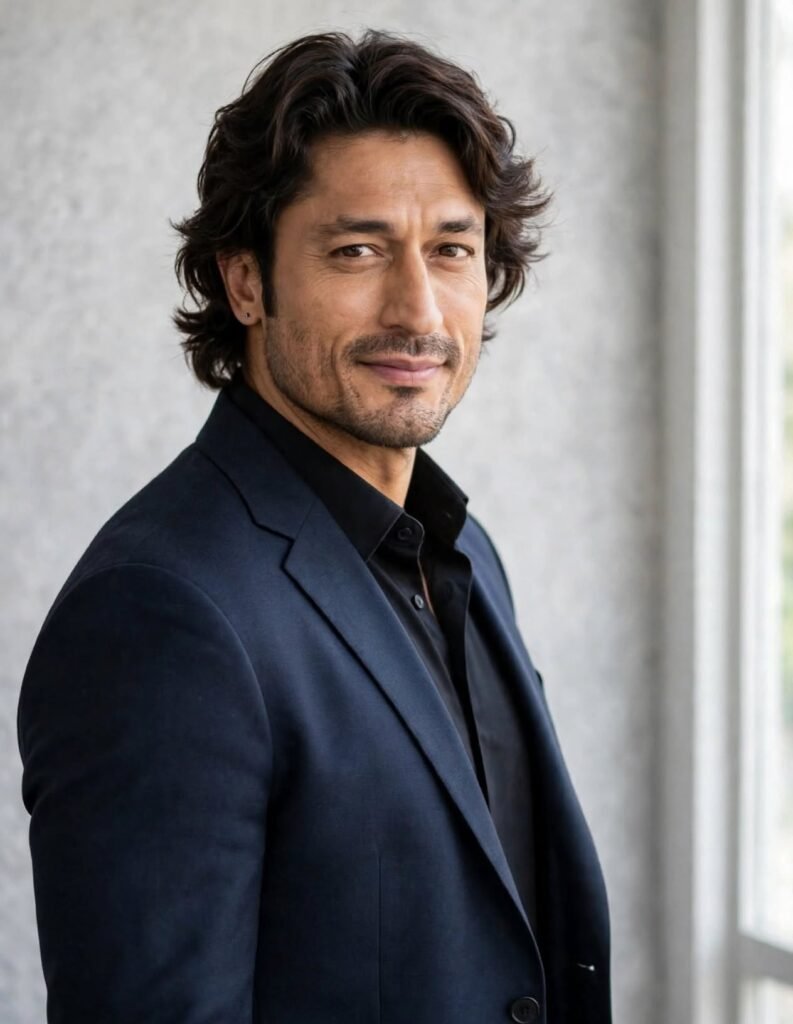
Vidyut Jammwal has built his career around something that has been part of his life since childhood: martial arts. Long before Hollywood came into the picture, he was developing the physical skills that would later set him apart in Indian cinema. His journey has taken him from action roles in Hindi, Tamil, and Telugu films to an international project that introduces him to a much wider audience.
Born on December 10, 1980, Vidyut grew up with an interest in martial arts. He began learning Kalaripayattu, a traditional martial art from Kerala, at a young age. The training became an important part of his life and eventually shaped his identity as an actor. While many performers prepare for action scenes through choreography, Vidyut already had years of martial arts experience to draw on.
His entry into films, however, did not happen overnight. Before audiences began recognising him as an action star, he had to find his place in an industry where established actors already dominated the screen.
His First Steps in Cinema
Vidyut began his film career in 2011 with the Telugu film Shakti. That same year, he made his Hindi film debut in Force, starring John Abraham. He played Vishnu, an antagonist whose physical presence and fighting skills helped him stand out.
Rather than beginning with a conventional hero’s role, Vidyut entered the industry by playing characters on the opposing side. These early performances gave him a chance to demonstrate his action abilities and gain experience in front of the camera.
He continued working across different Indian film industries. In 2012, he appeared in the Tamil films Billa II and Thuppakki. The latter, starring Vijay, became a notable commercial success. Vidyut’s work in these films helped him build a career beyond Hindi cinema, although he was still developing his identity as a leading actor.
His martial arts background remained one of his strongest advantages. It gave him the ability to perform demanding physical sequences and helped distinguish him from performers whose screen identities were built around other skills.
The Film That Changed His Career
A major turning point arrived in 2013 with Commando: A One Man Army. This time, Vidyut was no longer playing a supporting character or an antagonist. He took the lead as Karanvir Singh Dogra, a trained commando caught in a dangerous situation.
The film placed his martial arts abilities at the centre of the story. Its action sequences allowed him to demonstrate his skills in a way that earlier roles had not fully explored. Audiences could see what made him different: his physical control, speed, and ability to carry demanding fight scenes.
Commando helped establish Vidyut as a distinctive action hero in Hindi cinema. He was not simply another actor performing choreographed fights; martial arts had been part of his life long before his film career began.
He returned to the character in Commando 2: The Black Money Trail in 2017 and Commando 3 in 2019. The series became an important part of his professional identity, connecting his name with action-driven films and physically challenging performances.
Building a Career Beyond One Role
Vidyut did not limit himself entirely to the Commando franchise. Over the years, he appeared in films such as Anjaan (2014), Baadshaho (2017), Junglee (2019), Yaara (2020), Khuda Haafiz (2020), and Sanak (2021).
These projects gave him opportunities to explore different characters while continuing to use the action skills that had brought him attention. In Junglee, he played a veterinarian whose connection with elephants becomes central to the story. In Khuda Haafiz, he portrayed Sameer Chaudhary, a man trying to rescue his wife from a dangerous situation. The film later received a sequel, Khuda Haafiz Chapter 2: Agni Pariksha, released in 2022.
He also expanded his work beyond acting. Vidyut took on producing responsibilities, including on Crakk: Jeetegaa… Toh Jiyegaa (2024). His career therefore developed in more than one direction, even as action remained the field most closely associated with his name.
Not every project brought the same level of attention, and his career has continued through a mixture of roles and opportunities. Still, he has maintained a recognisable place in Indian action cinema by building on the skills he had developed long before his debut.
From Indian Films to Hollywood
For an actor whose career had largely been built in Indian cinema, Hollywood represented a significant new step. Vidyut’s international opportunity arrived with Street Fighter, the live-action adaptation of the popular fighting-game franchise directed by Kitao Sakurai.
In the film, he portrays Dhalsim, a character known in the games for his yogic background and unusual fighting abilities. The role has a natural connection to Vidyut’s own interests and physical discipline, making it a fitting project for an actor whose screen identity has long been linked to martial arts.
In an interview published by The Hollywood Reporter India in October 2026, Vidyut spoke about how he became interested in the game after being cast. He was initially unfamiliar with it but immersed himself in its world once he got the role. He also discussed the film’s deliberately stylised action and its appeal to both established fans and viewers who might be new to the franchise.
Reports about his casting have highlighted another interesting detail: Vidyut said that he secured the opportunity without an agent and after a single audition. That account suggests that his established action background and the fit between his abilities and the character played an important part in the process.
For Vidyut, Street Fighter is more than another action film. It brings his martial arts experience into a major international franchise and gives audiences outside India a new way to discover his work. However, its eventual impact on his Hollywood career will depend on the film itself, its reception, and the opportunities that follow.
Priyanka Chopra and the Wider Indian Presence in Hollywood
Vidyut has also credited Priyanka Chopra’s international success with helping create greater visibility for Indian actors in Hollywood. Her career has shown that Indian performers can build professional lives across different entertainment industries.
His comments do not mean that Chopra personally secured his role in Street Fighter. Rather, he has recognised the broader effect that a successful international career can have on how people in Hollywood view talent from India.
That wider visibility may create more opportunities, but individual actors still need to earn their own roles and demonstrate what they can bring to a production. Vidyut’s martial arts background and years of action-film experience form an important part of his own story.
What Comes Next for Vidyut Jammwal?
By the time Street Fighter entered the picture, Vidyut had spent around fifteen years building a career across Indian films. He had moved from a supporting role in Force to leading the Commando series, exploring different genres, producing films, and taking on an international character.
His Hollywood debut marks a new stage rather than the end of that journey. It may introduce him to a larger global audience and open doors to further international projects, but future success is never guaranteed by a single casting announcement.
What remains consistent is the foundation he built early in life. His martial arts training gave him a skill set that became central to his career, while his film work allowed him to turn that skill into a recognisable screen identity.
Vidyut Jammwal’s story is still unfolding. From his first roles in Indian cinema to playing Dhalsim in Street Fighter, his career shows how a distinctive strength can become the basis for new opportunities. Hollywood is now another chapter in that story, and what he does next will determine how far that opportunity takes him.